

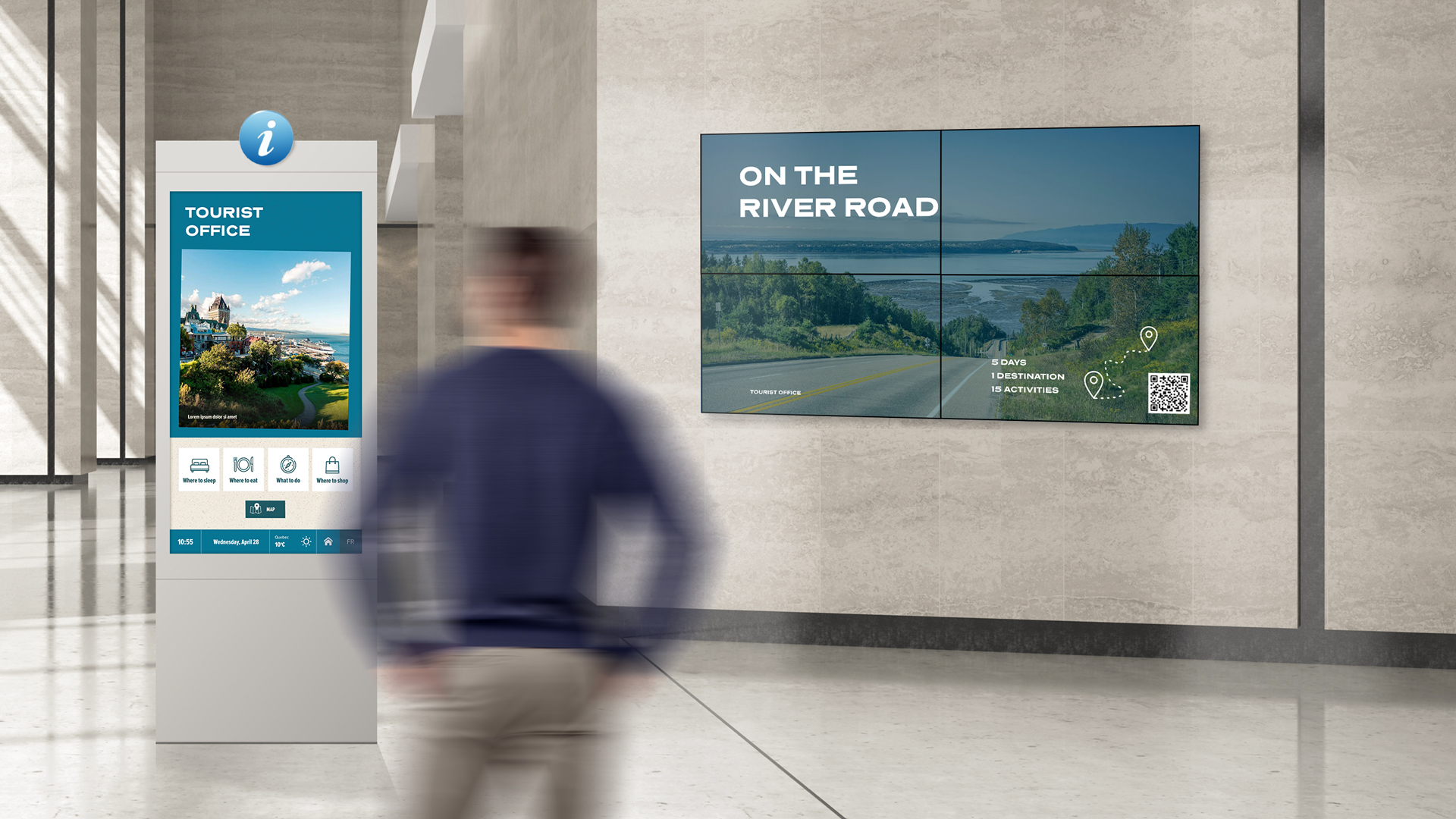
In a context where visitors are seeking seamless, accessible, and personalized experiences, the tourist information center is reinventing itself. The era of static counters and paper brochures is giving way to a vibrant, interactive, and connected space. Through digital signage, interactive kiosks, and video walls, destinations can inform, inspire, and guide visitors in a more dynamic and engaging way. This digital transformation not only enhances the distribution of information, but also showcases the region and strengthens the role of the tourist office as a true gateway to the destination.
Interactive kiosks at the heart of the visitor experience
Interactive kiosks represent a powerful lever for modernizing tourist information offices. They provide visitors with autonomous access to information: where to eat, where to stay, what to do, where to shop, and what services are available in the region. With these tools, visitors can explore information at their own pace, based on their interests, without having to wait at the counter.
Beyond improving operational efficiency, these kiosks also become a strategic tool for promoting the destination. They direct visitors toward local businesses, attractions, and events while reflecting the region’s identity and vitality. The experience becomes both practical and immersive: visitors find what they are looking for, but also discover what they didn’t yet know existed.

Digital screens and video walls: capturing attention and showcasing the region
Integrating a video wall or digital signage screens into a tourist information center creates an immediate point of attraction. These visual displays present captivating images of the region—landscapes, activities, gastronomy, and cultural heritage—that grab visitors’ attention as soon as they arrive. In just a few seconds, they convey the essence of the destination and spark curiosity.
Digital signage helps strengthen the destination’s brand image: modern, dynamic, and experience-driven. These visuals also inspire visitors to explore further, attend an event, or visit a local business. Adding a QR code to the content enriches the experience by making it easy to access complementary information and share details on mobile devices. Thanks to programmable and targeted content, each screen can adapt to the time of day, visitor profiles, or traffic flow, creating a personalized communication experience.
Digital signage and interactive kiosks transform the tourist information office into a more modern, welcoming, and efficient place. By making visitors autonomous in their search for information, these tools free up staff so they can focus on personalized assistance and promoting the region. The result: a smoother experience, more dynamic communication, and a destination image that is firmly oriented toward the future.