In most companies, information circulates constantly. E-mails, meetings, internal communications and instant messaging are widely used to transmit information on a daily basis. However, despite this multitude of channels, one problem persists: the right information doesn't always reach the right people, at the right time. This has a direct impact on organizational performance and team productivity.
In a work environment where employees are constantly in demand, even important information can go unnoticed, be misinterpreted or quickly forgotten. Ineffective communication then has concrete repercussions: operational errors, misalignment between teams, wasted time and reduced commitment. Digital signage is an effective way of making communication more visible and accessible.
Saturated internal communication
In most organizations, communication still relies heavily on e-mail. Although essential, this channel is showing its limitations. Inboxes are saturated, messages are skimmed quickly and only the most urgent really attract attention.
The problem lies not in the lack of information, but rather in its overabundance. Information is scattered, drowned in the flow and often disconnected from the context in which it should be seen. Important messages then go unnoticed, or are interpreted incompletely.
Optimizing communication with digital signage
To improve internal communication, it's no longer enough just to send messages. Messages need to be integrated directly into the working environment. This is where digital signage becomes a strategic lever.
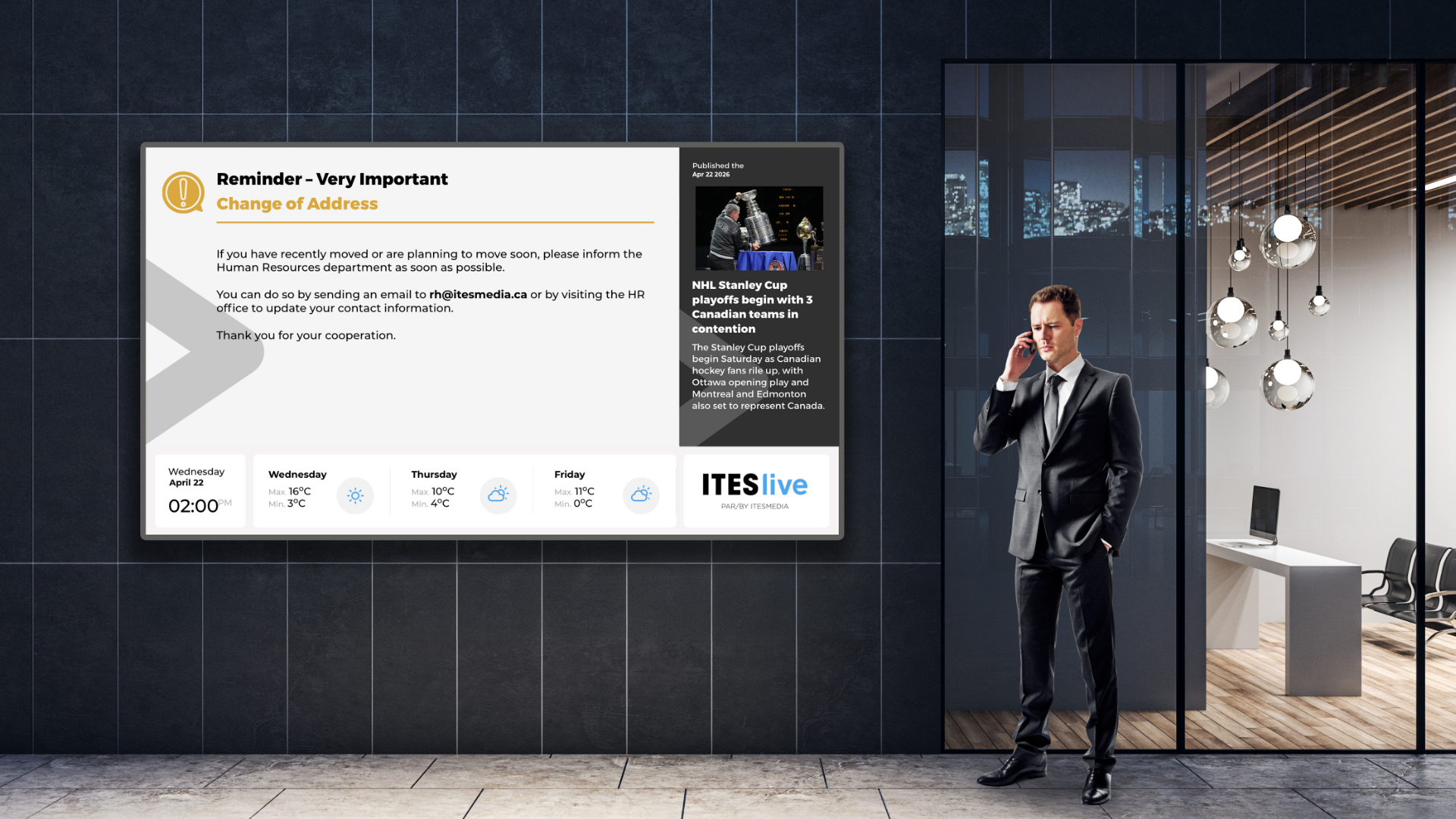
By broadcasting content on screens installed in high-traffic areas such as lobbies, break rooms, production areas or common spaces, digital signage transforms communication into a continuous presence. Information becomes visible, accessible and integrated into employees' daily lives.
Unlike traditional tools, information no longer needs to be sought out. It comes naturally, at the right time, without effort.
Better information through repetition
Memorization is largely based on repetition. Information seen only once is rarely retained, especially in a dynamic work environment.
This is precisely where digital signage changes the game. By delivering information directly to high-traffic areas such as lobbies, break rooms, common areas or production zones, it transforms communication into a continuous, visible and accessible presence.
Information is no longer something you have to fetch. It comes naturally, at the right time, without effort.
Grabbing attention without disrupting work
Information seen only once is unlikely to be retained. In a busy work environment, it is quickly forgotten or replaced by another priority.
Digital signage makes this natural repetition possible. A message on a screen doesn't interrupt work. It accompanies the daily routine. Employees see it as they pass by, then see it again later, often without even realizing it.
To maximize impact, however, content must remain clear, concise and relevant. Effectiveness depends on a balance between visibility, simplicity and repetition.
Agile, real-time communication
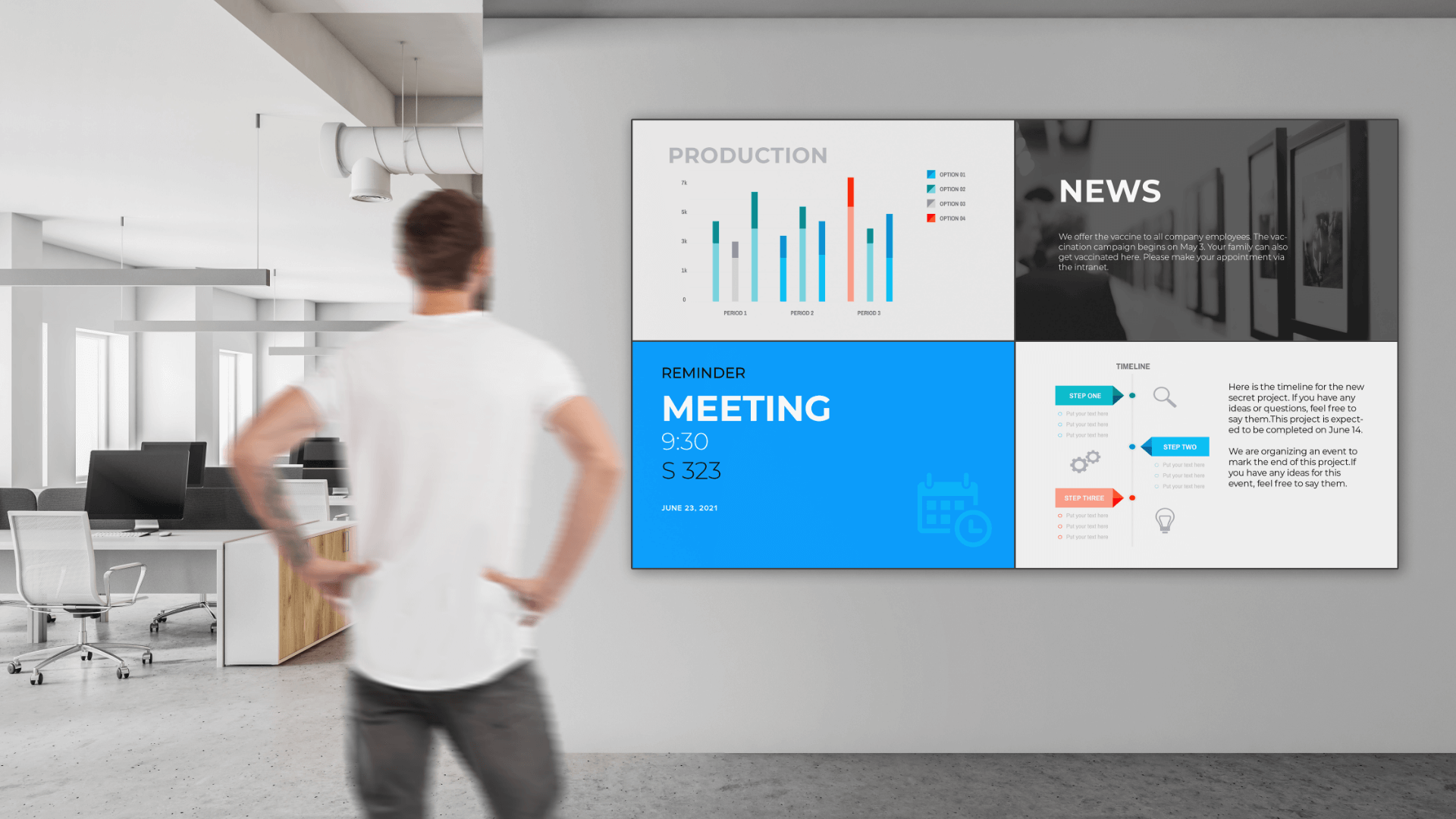
In an environment where priorities change rapidly, information must be updated instantly. Digital signage makes it possible to modify and distribute content in real time, on a large scale, without physical intervention.
Whether it's an instruction, an objective or an urgent internal communication, information always remains up to date, reducing the risk of errors and improving team responsiveness.
Reinforcing employee commitment
In addition to providing information, internal communication plays a key role in corporate culture. By highlighting successes, objectives and values, digital signage helps reinforce a sense of belonging.
By making information visible, continuous and engaging, digital signage becomes a real performance lever. It doesn't replace other channels, but complements them by providing what they lack most: clarity, presence and impact.