

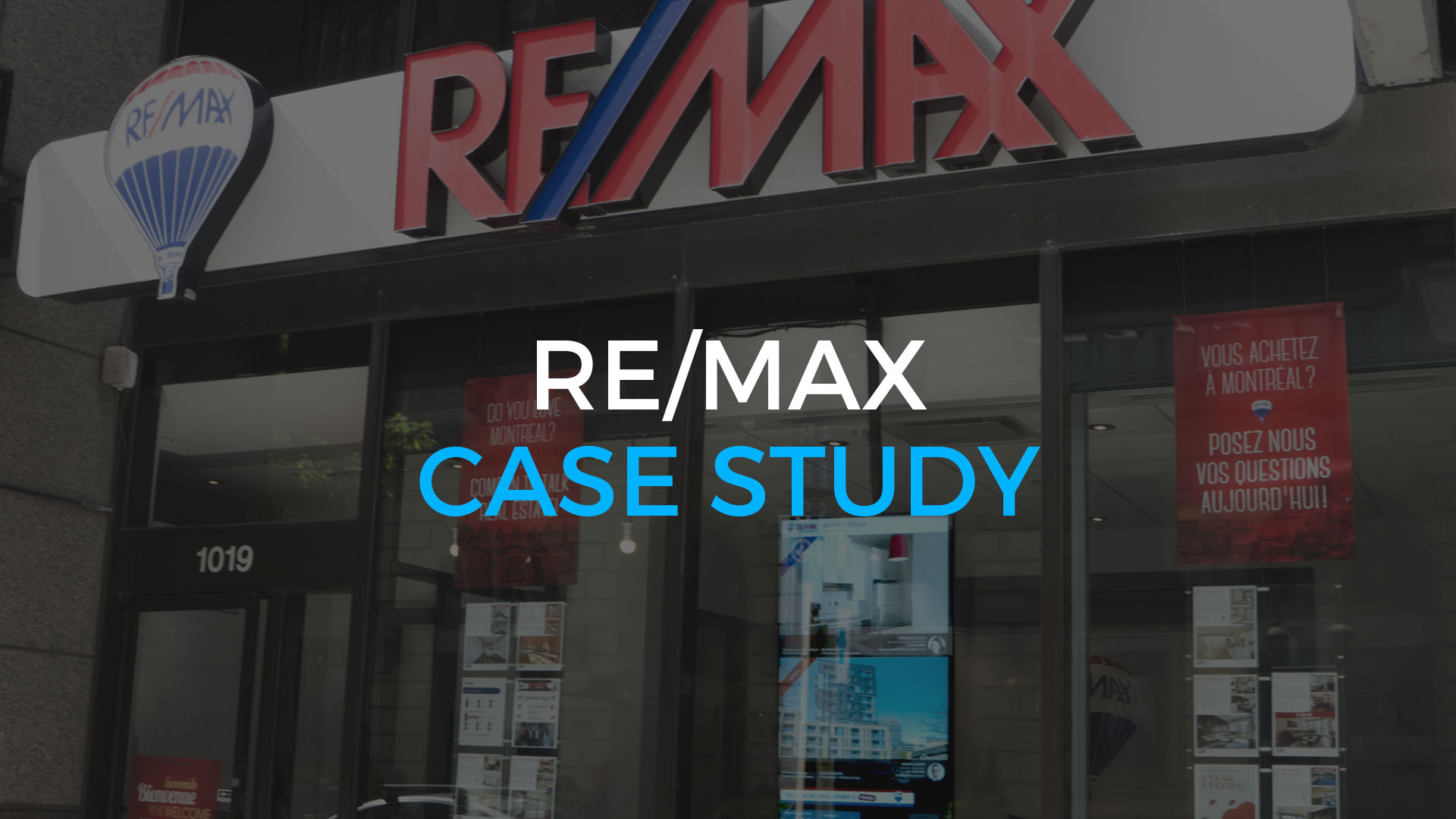
You may have noticed, when passing by a real estate brokerage, that in the past storefront windows were mostly filled with printed property sheets, photos, and static listings displayed behind the glass. While these traditional displays served their purpose, they were limited in flexibility and required frequent manual updates. Today, many real estate agencies have replaced these classic methods with digital signage screens and interactive kiosks. These screens modernize property listings by displaying real-time information such as new properties, price updates, and recently sold homes. With a touch-screen kiosk, it is also possible to capture leads on the spot and automatically send their information directly to the right broker.
Real Estate Case Study: RE/MAX L'Espace

Interactive touch-screen kiosks take this experience one step further by turning the agency’s window or lobby into an active point of interaction. Potential buyers or sellers can browse listings based on their preferences, explore detailed photos, and access key information such as location, price range, and property features. More importantly, these kiosks make it easy to capture leads. Visitors can enter their contact information, request more details, or ask to be contacted by an agent.
All collected information can then be sent automatically to the most relevant broker, ensuring faster follow-ups and more efficient lead management. By combining digital signage with interactive kiosks, real estate brokerages not only enhance their visibility but also create a modern, engaging, and customer-focused experience that helps them stand out in a competitive market.
In conclusion, the case study of RE/MAX L’Espace clearly demonstrates how digital signage and interactive kiosks can transform a real estate brokerage’s marketing strategy. By replacing static displays with dynamic, interactive technology, agencies can better attract attention, engage potential clients, and streamline lead generation. This modern approach not only improves operational efficiency but also strengthens the overall customer experience in an increasingly competitive real estate market.